How Your Bedtime Routines Shape You
Most of us don’t think of bedtime as spiritual. It’s just the moment we finally stop… or at least, try to.
The dishes are mostly done (or ignored). The emails can wait. The group chat slows down. You change into something comfortable, sit or lie down, and reach for whatever helps you come down from the day. For some of us, that’s a show we’ve already seen three times.
For others, it’s scrolling until our eyes burn a little. For others, it’s trying to get one last thing done, so tomorrow feels more manageable.
And over time, many of us start to notice something important: the way we end our day doesn’t just close it out…it carries into the sort of rest we get that night and even how we begin the next day. If we go to bed distracted, we often wake up restless. If we fall asleep anxious, that anxiety tends to greet us again in the morning. And if we spend the last moments of our day avoiding what we’re feeling, those same thoughts and emotions rarely disappear overnight.
There’s a reason for that. The end of the day has a way of surfacing what we’ve been holding beneath the surface. Throughout the day, we move quickly from one thing to the next. There’s enough noise, urgency, and interaction to keep us from lingering too long on what’s happening internally. But at night, when everything slows down, we’re left to finally process our experiences.
And, likely without realizing it, we’ve each developed ways of dealing with those moments. A kind of rhythm to handle what didn’t get done, what didn’t go well, and what we’re still carrying. This rhythm tends to be shaped more by habit than by intention, but it’s still shaping us. Sometimes, this might look like replaying conversations long after they’ve ended, trying to rewrite what we wish we had said. Other times, it looks like forcing everything aside and just scrolling or watching something until we’re too tired to think. And sometimes, it’s simply lying there, with a brain that’s unable to turn off but unsure what to do with it.
For centuries, Christians have recognized the weight that the end of the day holds. Long before modern distractions filled our evenings, nights were still filled with uncertainty about what the night could bring and anxieties about the future. So, with Scripture as the inspiration, Christians began to practice what is often referred to as Compline or Night Prayer, a simple rhythm of acknowledging the day as it truly was—unfinished, imperfect, sometimes heavy—and then placing it back into God’s hands.
These prayers included the reading of a Psalm and another Scripture, a moment of confession, and proclaiming trust in God’s protection through the night. There was an honesty to it: naming what had gone wrong or celebrating what’s gone right, receiving grace, and remembering that even in our weakness, we are cared for. Rather than ending the day by holding everything together, Compline became a way of releasing it (and still is for those who continue the practice today!).
After these prayers, many would enter what was often called “the great silence”—a period of quiet that stretched from the end of the day into the beginning of the next. In many communities, that silence wasn’t broken again until morning when they gathered for prayer at the start of a new day and a meal (“breakfast”, anyone?).
For many of us, prolonged silence feels unfamiliar, even uncomfortable. We’ve grown used to filling every gap with noise, whether it’s background entertainment, social media, or some other kind of constant input. And when we do encounter silence, it can feel exposing; the moment when our thoughts become more noticeable, our anxieties closer, and when we realize just how tired we actually are. So, it makes sense we’d instinctively want to avoid it.
But over time, constantly avoiding that space can leave us carrying more than we were meant to. When we never fully acknowledge the day, we never quite process it. The weight lingers, shaping our rest and, eventually, our waking lives.
So, what if we tried to integrate this routine of ending the day with God into our own lives? A moment of honesty to acknowledge that we didn’t get to everything, didn’t do everything right, can’t hold it all together on our own, and that we’re so thankful that God is there to hold us through it all.
This doesn’t require a complicated structure. Simple can be just as meaningful. Maybe look up some existing forms of Night Prayers. Or, just take a few minutes to reflect on what stayed with you from the day—what felt heavy, what brought joy, what you’re still carrying. Try to find a moment of gratitude, even if the day felt difficult. And then, perhaps most importantly, intentionally practice release. Say something like, “God, I’m giving you _______, so that I can rest.” Remind yourself of his great power and that he loves you much, much more than you can imagine.
Some nights, even this can feel difficult. Our minds move quickly, and our bodies, though tired, don’t always follow. In those moments, it can help to have something that gently guides us into stillness—a voice, a prayer, or a reflection that slows us down just enough to become aware of God’s presence. When we can’t create a perfect moment of peace, there are a lot of great resources that can help lead us into it.
This is where guided practices of night prayer can become especially meaningful. They offer a way of entering into reflection and rest without needing to generate it entirely on our own. They create space to listen, to release, and to settle, even when our thoughts feel scattered. (Our Daily Bread has actually created a resource to help with this! Check out Evening Meditations here)
At its core, ending the day with God is not about adding one more thing to your routine. It’s about recognizing that the final moments of your day are already shaping you and intentionally choosing how to end the day based on your values and desires for peace, relief, and a deeper relationship with God. It’s a quiet reorientation—from control to trust, from striving to rest, from carrying everything alone to being held within God’s care.
Over time, these small moments begin to change something deeper. Not all at once, and not always in ways you can name, but gradually. The end of the day becomes a place of noticing where God was present, where you still need grace, and where you can finally let go.
And that kind of ending has a way of changing what comes next.
A Prayer to End the Day
God who reigns over day and night, walk with me into these dark and quiet moments of evening. Thank you for the gift of life you have given me today. Protect me from the temptations of the night, and allow my body and soul the deep rest they need. Help me to trust that, even when my heart is asleep to your nearness, you are still watching over me. I’m laying down my own strength and trusting you, Sustainer of Life, that in the morning, my soul will awaken again in your good presence.
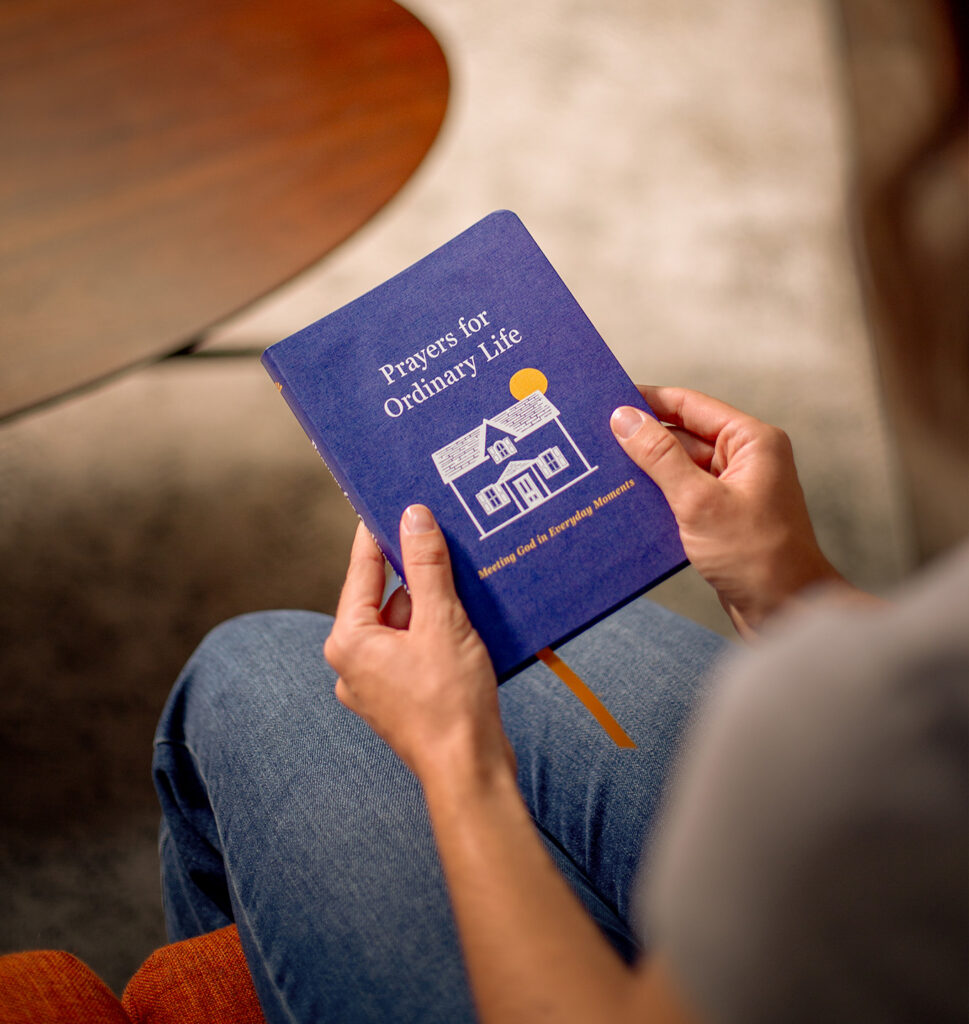
(From Prayers for Ordinary Life, pg. 32)